Published on · Simone Renzi
Requirements updated on 3 November 2026
Work statusArchitecture selected; software, electrical integration and physical control remain to be implemented and verified.
01 / Architecture
Autonomy as a design requirement
I have specified Numero 5 for ordinary autonomous operation, with local processing and no required cloud services. This is a design choice: I am not describing autonomy already demonstrated by the physical robot. Mechanics and electronics still need to come together in complete tests.
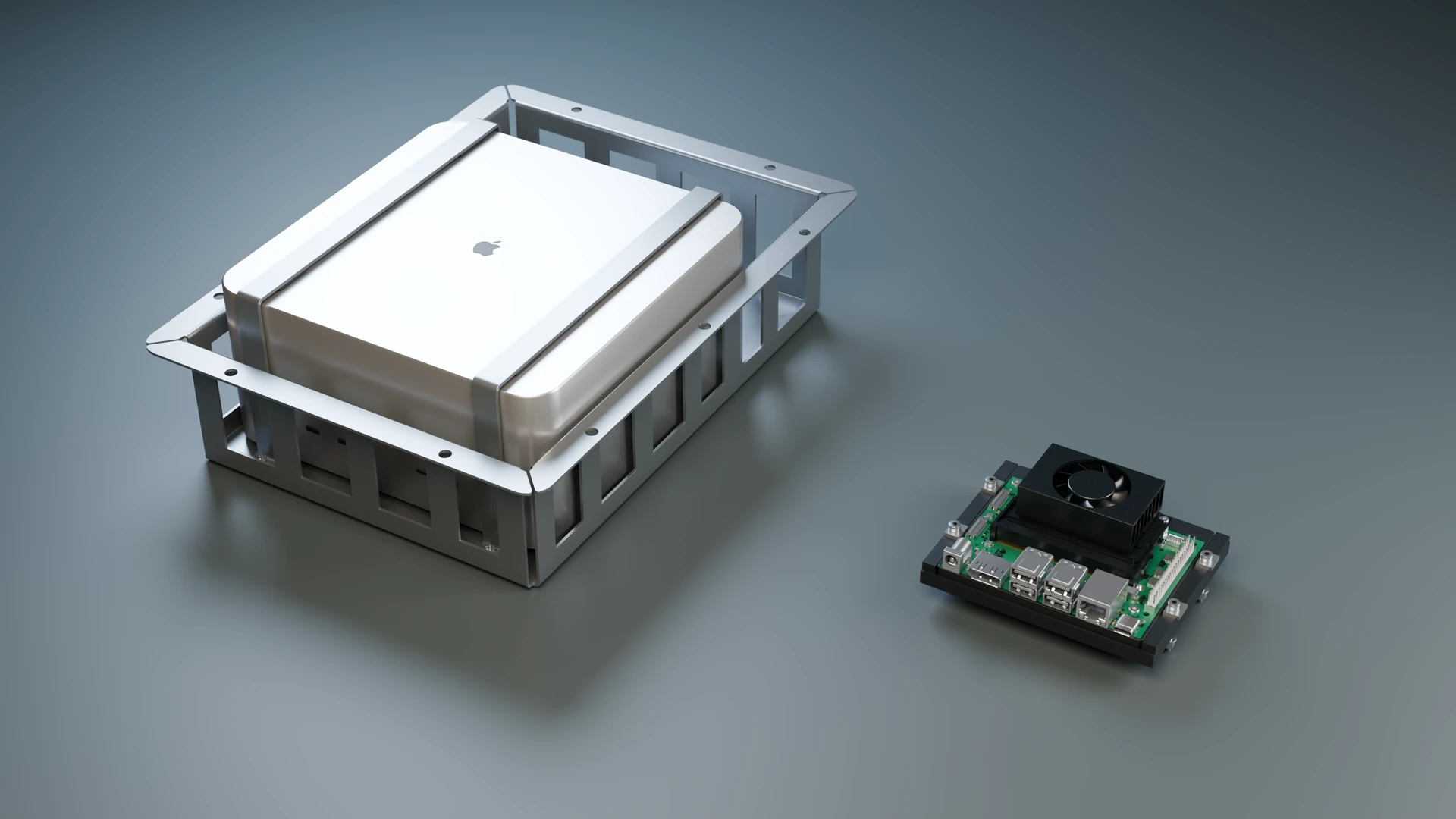
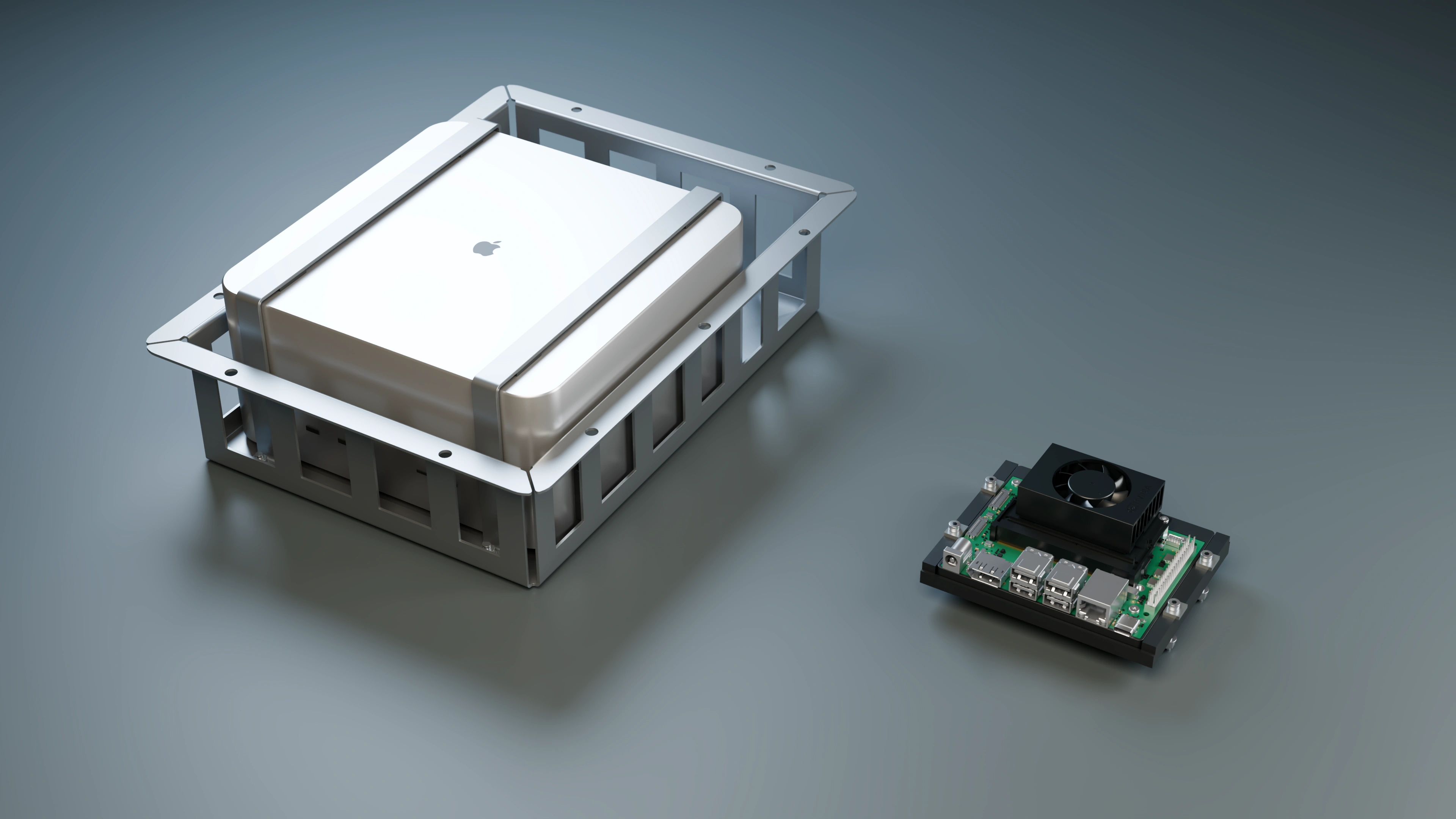
I have planned an onboard Mac Studio M2 Ultra with 64 GB of unified memory as the AI server. Its role is to provide processing and vision services to the central controller, separating high-level computation from motion management.
02 / Architecture
The Jetson’s role in the head
For the central controller, I refined my choice to the NVIDIA Jetson Orin Nano Super Developer Kit with 8 GB of memory. I cover its head mounting in a dedicated article; at system level, the node is intended to coordinate requests from AI services and interaction with peripheral controllers.
Having two computers does not imply identical roles. I have assigned the server function to the Mac and coordination to the Jetson. The final processing split, latency and behaviour after a lost connection still require measurement.
- 01Mac Studio M2 Ultra
Local AI services · 64 GB
- 02Jetson Orin Nano Super
Robot coordination · selected 8 GB kit
- 03Microcontrollers
Proposed ESP32 boards · local sensor and axis management
- 04Drivers and actuators
Electrical commands and physical movement
Role diagram, not a wiring diagram. Nodes must exchange commands and status; an independent hardware stop remains a requirement to implement and verify.
03 / Architecture
From commands to motors
The chain I have proposed continues through microcontrollers, drivers, servos and other motors. Requirements include six proposed ESP32 units to validate, internal Ethernet and CAN, with I²C reserved for local connections. Quantities and components still need reconciliation with individual modules.
The Fusion joint count does not automatically determine the motor count. Transmissions, linkages, rigid groups and passive elements must be reconciled into an actual electrical and mechanical bill of materials.
04 / Architecture
A dedicated software system and independent stopping
I have chosen to develop a dedicated software system, excluding SAINT.OS from the architecture. Requirements also separate the hardware stopping circuit from the Mac and communication bus, including the issue of gravity-loaded axes. This is a requirement to implement and qualify, not an already tested function.
05 / Architecture
Decisions still to be closed
Power, runtime, heat dissipation and wiring are tied to the same architecture. My proposal includes a 24 V-class battery, separate conversions for logic and actuators, and an inverter for the Mac. Sizing and the final circuit remain open: before fixing components and performance targets, I will need to compare real consumption, loads and fault conditions.
Documentation and references
For this account, I draw on project records, Fusion revisions and the checks described in the text. CAD views document their respective stages of development.