Mechanics and construction
Assemblies, joints, clearances and interfaces. Work in Fusion prepares later decisions on materials, manufacturing and assembly.
Explore the mechanics →MY LAB / ROBOTICS AND AI
Mechanics, control and artificial intelligence. My journey towards a full-size robot, one check at a time.
01 / THE JOURNEY
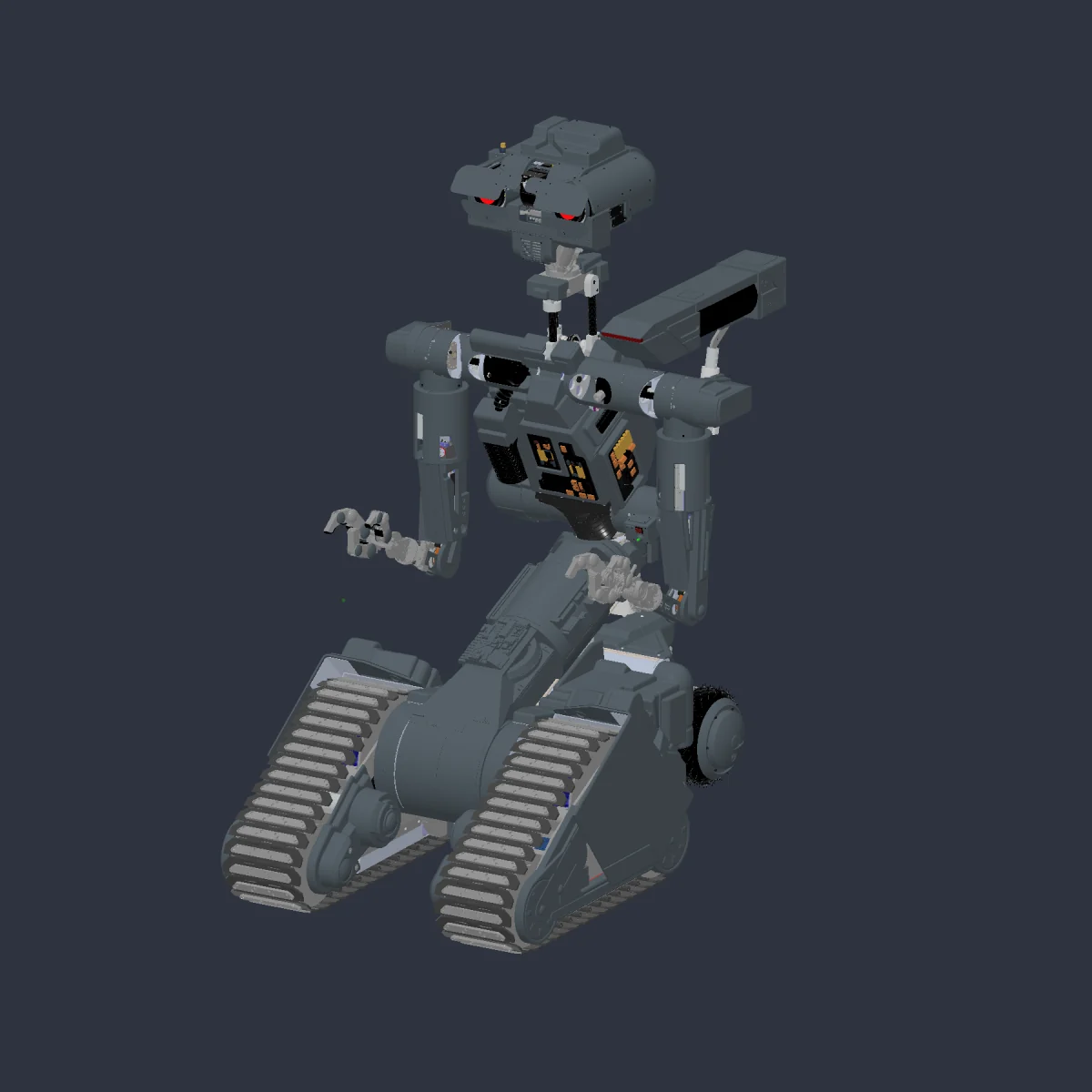
I have enrolled in a master’s programme in Computer Engineering, specialising in Robotics. This personal lab documents the work alongside that journey: mechanical design, electronics, control and artificial intelligence applied to a physical robot.
The central project is Johnny 5, the robot from Short Circuit. I want to build a full-size replica with the closest possible fidelity to the film robot. I am developing it towards my final thesis, documenting decisions, modifications and checks along the way.
Here I publish work I can show and explain: CAD models, component details, kinematic tests and architectural decisions. Each update distinguishes work on the computer from checks that will require the physical prototype.
02 / THE PROJECT
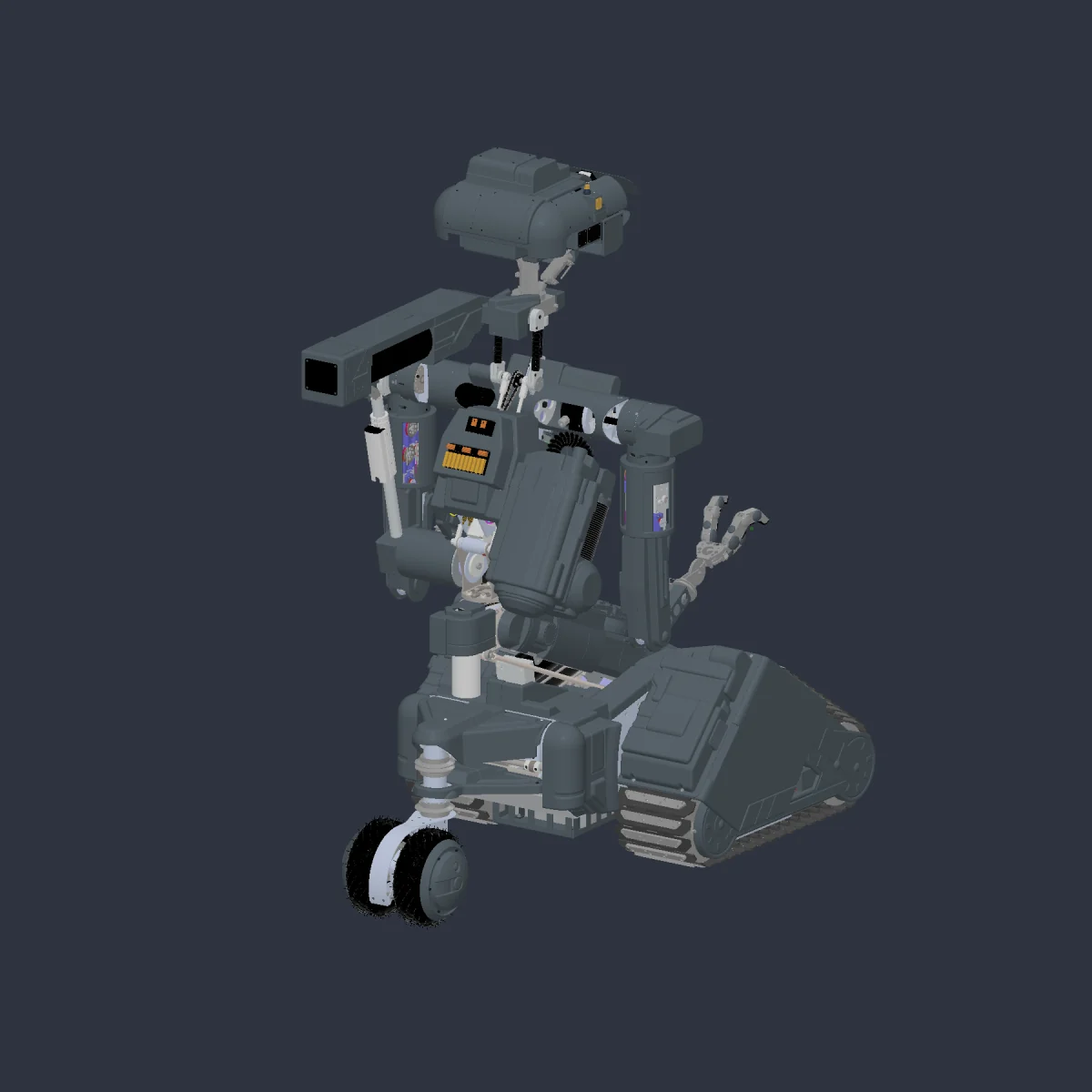
Johnny 5’s recognisable form meets an engineering process: modified and redesigned components, assembly integration and preparation of an architecture with onboard local AI.
A closer look at the project03 / AREAS OF WORK
Assemblies, joints, clearances and interfaces. Work in Fusion prepares later decisions on materials, manufacturing and assembly.
Explore the mechanics →From command to motion: central controller, microcontrollers, drivers and actuators. A chain still to be sized and checked on hardware.
Read the planned architecture →The project plans an onboard Mac Studio for AI and vision. Perception, dialogue and coordination will be developed alongside the control layers.
Discover the role of AI →Problems encountered, corrections and verifiable results. Documentation that grows with the project and supports the work towards the thesis.
Read the first technical entry →04 / THE METHOD
Each entry starts with a concrete question: what should this component do, which constraint must it satisfy, and how do I check that a change worked?
I retain the initial reference, compare revisions and record test results. The journal also covers open issues: it helps explain the project and recover the reasoning behind a decision when moving to the next phase.
OpenSAINT was an essential starting point. From that foundation I have modified many components and completely redesigned some of them. Documenting both the source and my contribution makes the robot’s evolution clear. Origins and personal contribution →
05 / FROM THE JOURNAL
3 November 2026 · A correction to CAD surfaces, comparison with the initial geometry and motion checks after reintegration into the assembly.
Open the technical entry →