Published on · Simone Renzi
Archive acquired on 27 October 2026
Work statusSource archive preserved; individual models require checks for manufacture.
01 / Origins and sources
The project starts with its sources
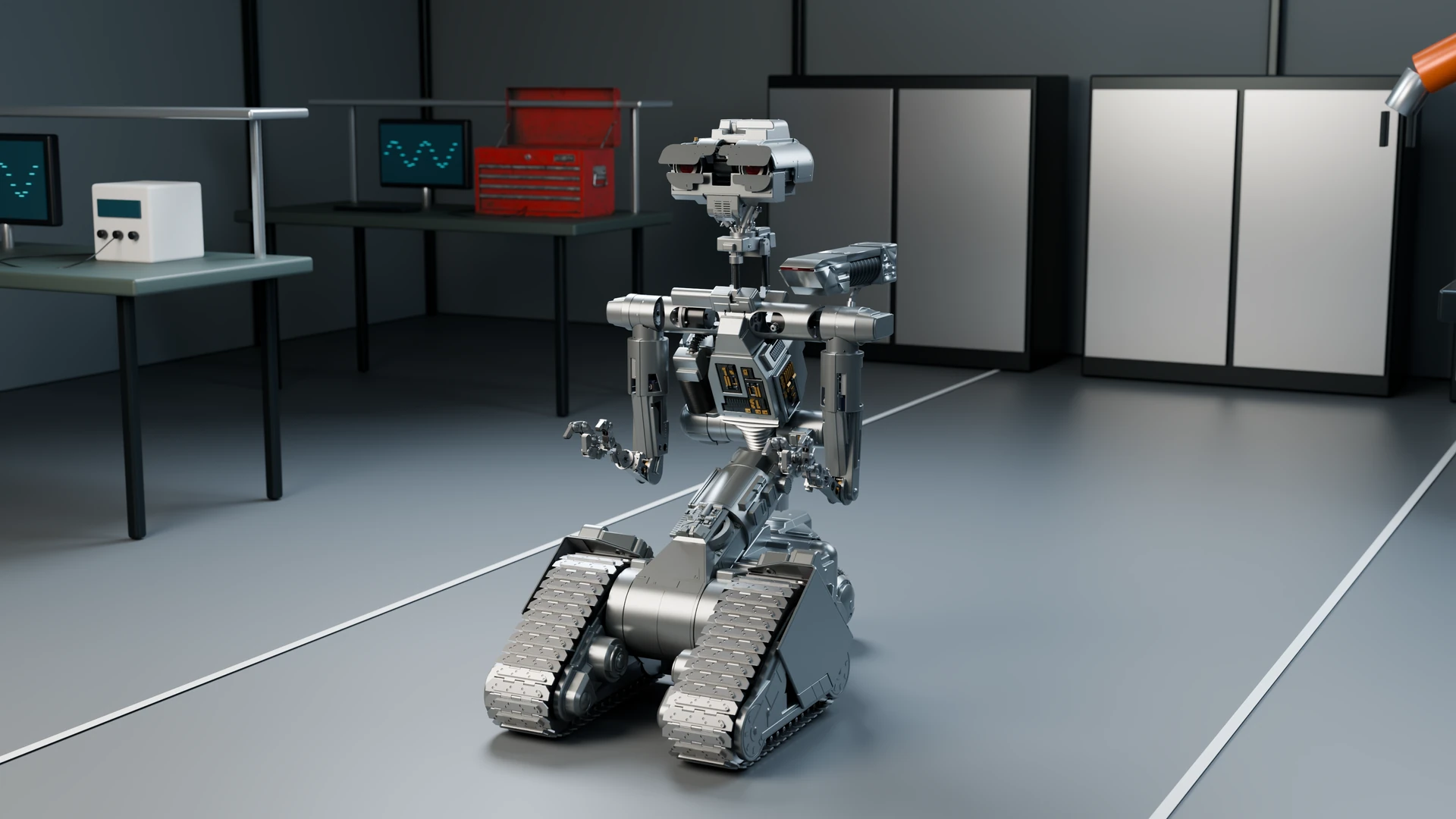
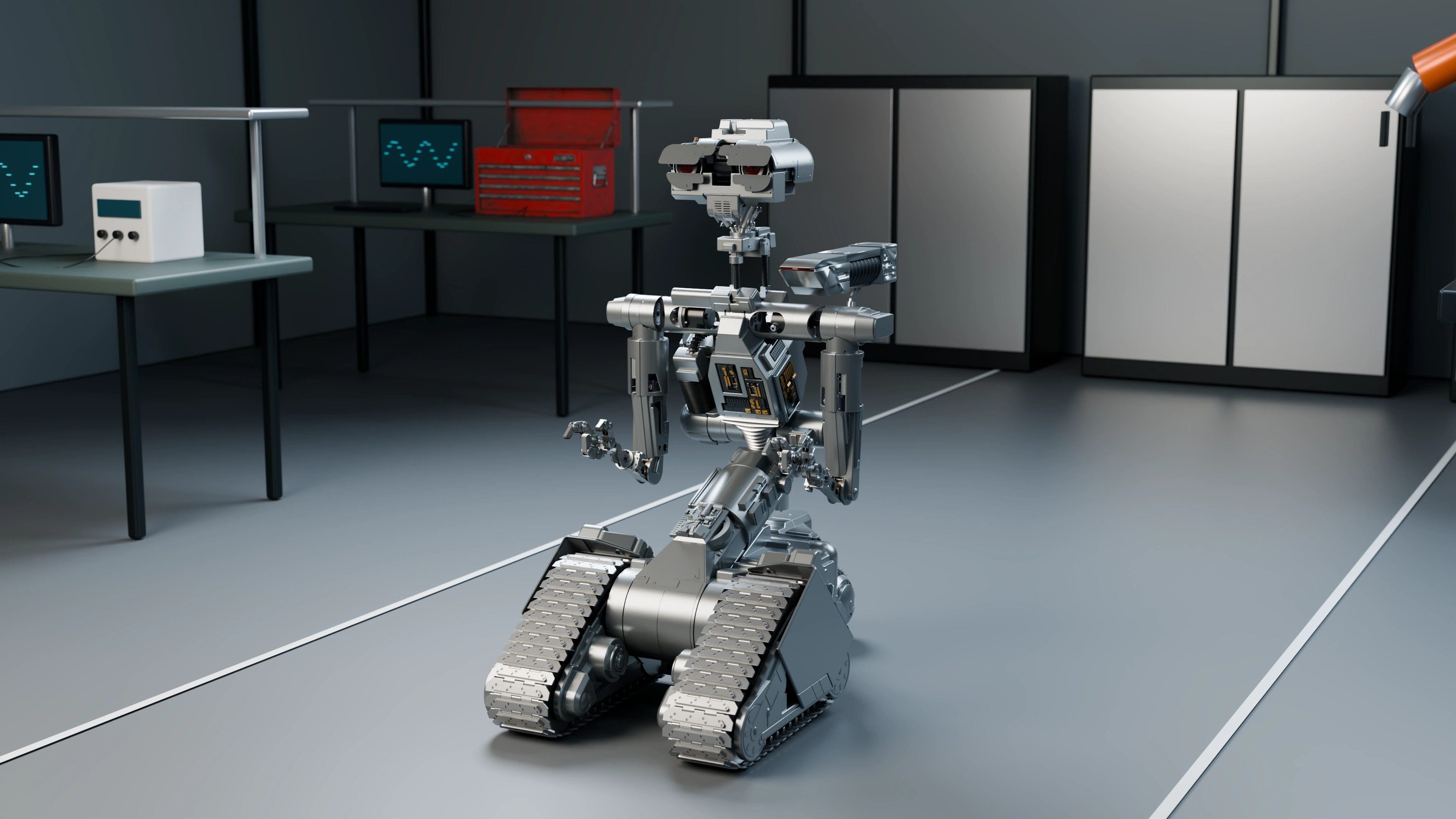
To build a full-size Numero 5, I began by locating available designs and tracing their origins. OpenSAINT, developed by Input Inc., was an essential starting point: it provided a substantial collection of parts, subassemblies and documentation for my own development work.
On 27 October 2026, I acquired the July 2026 public release, including its Git LFS assets. I keep originals separate from conversions and modifications, so later decisions can be compared with the models from which they were derived.
02 / Origins and sources
Different models describe different robots
The collection also includes 794 Carlz STL files across 17 historical packages derived from 2015 CAD. These are separate references: their author’s model is static or poseable, rather than evidence of a functioning autonomous robot. Ceive and openJohnny are separate scale models as well.
I therefore retained original names, quantities and variants. A left-hand file is not automatically treated as a valid right-hand part, and an old STL is not substituted for a current component configuration without comparison.
03 / Origins and sources
An archive organised around fabrication
I grouped the resources into originals, 3D printing, CNC, 2D cutting, commercial components, electronics, software and documentation. Category views refer back to the originals, avoiding disconnected copies. When evidence of a part’s fabrication process is insufficient, I leave it unclassified.
This distinction matters: a CAD extension or an “As Machined” configuration does not describe every required operation. Production will still require a material choice, dimensions, tolerances and a coherent fabrication sequence.
04 / Origins and sources
Integrity before modification
In the archive, I recorded ZIP checks, file-count comparisons, LFS verification and an inventory with SHA-256 hashes. These checks help identify missing or changed files; they do not establish printability, strength or the correctness of every interface.
05 / Origins and sources
A shared foundation, a personal development path
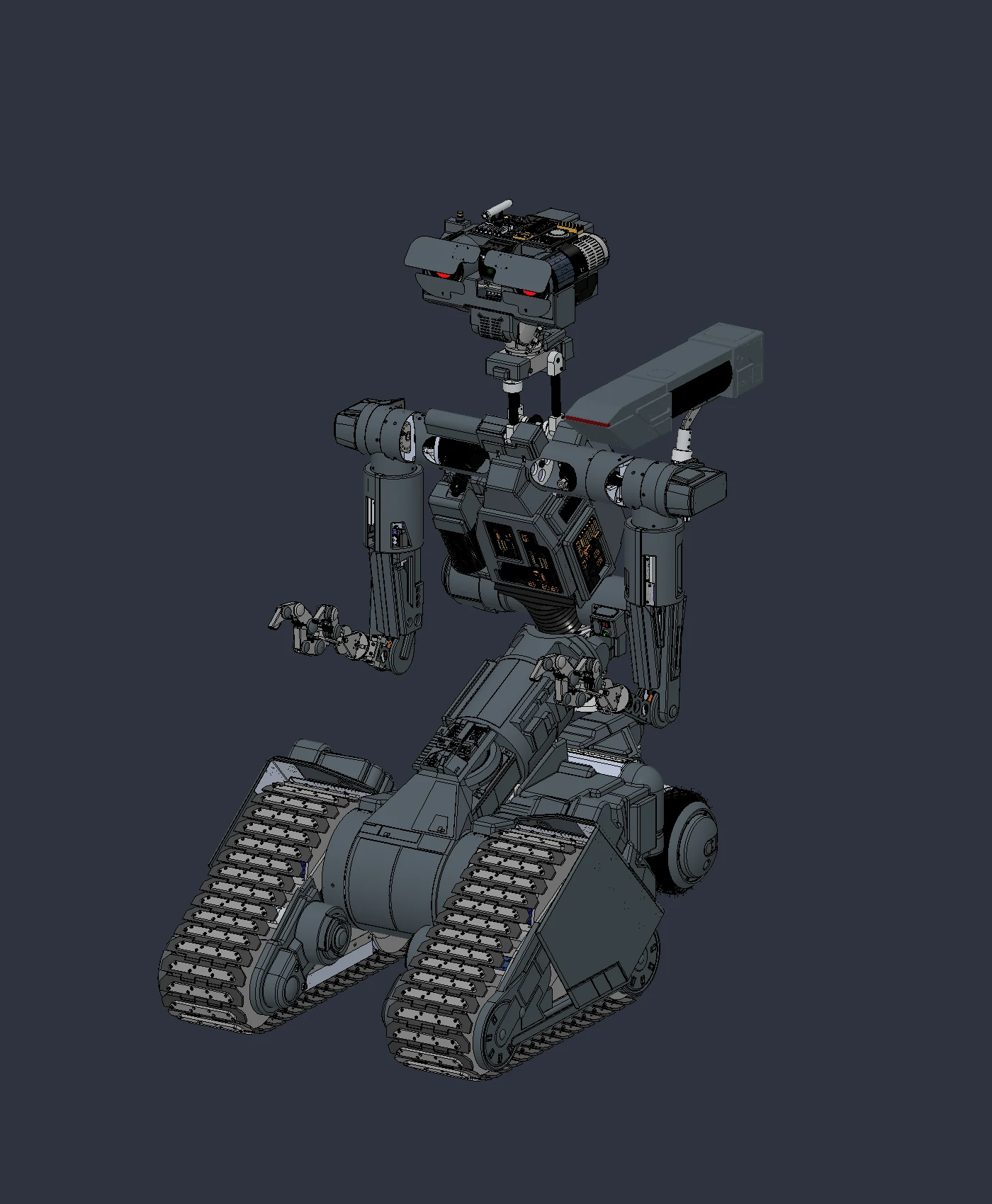
From this foundation, I have modified many components and completely redesigned some. In this journal, I follow that progression: from sources to the Fusion assembly, then to mechanical and electronic decisions. Provenance and licences remain associated with their respective materials, and OpenSAINT retains explicit credit throughout.
Documentation and references
For this account, I draw on project records, Fusion revisions and the checks described in the text. CAD views document their respective stages of development.